Traditional Corsican Veal with Olives Recipe: Tracing the Historical Roots of Island Cuisine
The rugged beauty of Corsica extends far beyond its dramatic coastline and mountainous interior. This Mediterranean island, nestled between the French and Italian mainlands, has cultivated a culinary identity that reflects centuries of cultural exchange, agricultural tradition, and a fierce sense of regional pride. Among the many dishes that capture the essence of Corsican cookery, veal with olives stands out as a testament to the island's ability to transform simple, locally sourced ingredients into something truly memorable. This hearty stew embodies the spirit of a people who have long relied on their land and sea, crafting meals that are as nourishing as they are flavourful.
The Heritage and Origins of Corsican Veal with Olives
Ancient mediterranean influences on corsican cookery
Corsican cuisine is a fascinating tapestry woven from threads of both French and Italian culinary traditions. The island's strategic position in the Mediterranean has made it a crossroads of empires, trade routes, and cultural influences. From 1284 to 1755, Corsica was under Genoese rule, a period during which Italian grape varieties and cooking techniques became firmly rooted in local culture. The Genoese brought with them a clone of the Sangiovese grape, which would later evolve into the Nielluccio variety that now defines much of the island's wine production. This Italian heritage is palpable in dishes that emphasise slow cooking, the use of aromatic herbs, and the pairing of meat with robust, earthy flavours.
When Corsica became French in 1769, the same year Napoleon was born on the island, another layer of culinary sophistication was added. French techniques of braising and the careful balance of wine, meat, and seasoning found their way into traditional recipes. The result is a unique gastronomic identity that neither fully embraces French refinement nor Italian rusticity, but instead carves out a distinct middle ground. Veal with olives is a prime example of this synthesis, combining the French love for tender, slow-cooked meat with the Italian tradition of incorporating olives and tomatoes into hearty stews. The dish reflects a history of adaptation and resilience, much like the Corsican people themselves.
The Role of Olives in Traditional Island Gastronomy
Olives have been cultivated in the Mediterranean for thousands of years, and Corsica is no exception. The island's climate, with its hot, dry summers and mild winters, provides ideal conditions for olive groves to flourish. Corsican olive oil is prized for its peppery, fruity notes, and the olives themselves are a staple in both everyday meals and celebratory feasts. In traditional Corsican cookery, olives are not merely a garnish or afterthought; they are integral to the flavour profile of many dishes, lending a briny depth that balances the richness of meats and the acidity of tomatoes.
In the context of veal with olives, the fruit of the olive tree serves multiple purposes. First, it provides a counterpoint to the tender, mildly flavoured veal, introducing a salty, slightly bitter note that prevents the dish from becoming overly rich. Second, olives release their oils during the slow cooking process, mingling with the wine and stock to create a sauce that is both complex and deeply satisfying. The choice to use pitted olives is practical, allowing diners to enjoy the dish without interruption, but it also reflects a broader philosophy in Corsican cooking: simplicity and ease of enjoyment are just as important as flavour. This approach to food is evident in many traditional recipes, from aziminu, a robust fish stew, to civet de sanglier, a wild boar casserole that showcases the island's game.
Essential ingredients and preparation techniques
Selecting Quality Veal, Wine, and Olive Oil for Authentic Flavour
The success of any traditional recipe hinges on the quality of its ingredients, and veal with olives is no exception. Veal shoulder is the preferred cut for this dish due to its ideal balance of meat and connective tissue. When braised slowly, the collagen in the shoulder breaks down, yielding a texture that is tender yet substantial. It is important to source veal that is pale in colour and finely grained, as these characteristics indicate youth and tenderness. In Corsica, where livestock often roam semi-wild across hillsides dotted with chestnut trees and wild herbs, the meat carries a subtle complexity that is difficult to replicate elsewhere.
Wine is another cornerstone of this recipe, and the choice of varietal can significantly influence the final flavour. Corsican wines, particularly those made from Nielluccio or Sciacarello grapes, are ideal companions for veal. Nielluccio, a descendant of Sangiovese, offers earthy, slightly tannic notes that complement the richness of the meat, while Sciacarello brings a softer, more aromatic profile with hints of red fruit and spice. A dry white wine made from Vermentino, with its crisp acidity and subtle citrus undertones, can also be used to add brightness to the stew. The wine not only deglazes the casserole, lifting the caramelised bits of meat and onion from the bottom of the pan, but also infuses the dish with a depth of flavour that water or stock alone cannot provide.
Olive oil is the final essential element, and Corsican olive oil is particularly prized for its robust, peppery character. This oil is used both to sear the meat and to enrich the sauce as it simmers. The quality of the olive oil can elevate the entire dish, adding layers of flavour that linger on the palate. In Corsica, olive oil tastings are as common as vineyard tours, and locals take great pride in their artisanal production methods. When selecting olive oil for this recipe, look for a product that is cold-pressed and labelled with its region of origin. The difference in taste between a mass-produced oil and a small-batch Corsican variety is profound, and it is worth seeking out the latter for an authentic experience.
Step-by-step method: from casserole to finished dish
Preparing veal with olives is a process that rewards patience and attention to detail. Begin by cutting the veal shoulder into generous chunks, each roughly the size of a golf ball. This ensures that the meat remains moist and tender during the long cooking process. Heat a generous amount of olive oil in a heavy-bottomed casserole over medium-high heat, then add the veal in batches, being careful not to overcrowd the pan. Searing the meat properly is crucial, as it develops a caramelised crust that adds depth to the final sauce. Once each piece is browned on all sides, remove it from the casserole and set it aside.
Next, add diced onions to the same casserole, allowing them to soften and take on the flavours left behind by the meat. If you have applewood smoked bacon on hand, this is the time to introduce it, as the smoky, salty notes will infuse the entire dish. Once the onions are translucent and beginning to caramelise, return the veal to the casserole and pour in the wine, scraping the bottom of the pan to release any stuck-on bits. Allow the wine to reduce slightly before adding canned crushed tomatoes, which will form the base of the sauce. The tomatoes should be of good quality, as their sweetness and acidity will balance the saltiness of the olives and the richness of the veal.
At this stage, add the pitted olives along with a bouquet of fresh herbs. Traditional choices include thyme, rosemary, and bay leaves, all of which grow abundantly in the Corsican maquis, the island's distinctive scrubland. The herbs should be tied together with kitchen twine so they can be easily removed before serving. Season the stew with salt and pepper, keeping in mind that the olives will contribute additional salt as they cook. Cover the casserole with a lid and transfer it to a low oven, where it will braise gently for several hours. The low, even heat allows the flavours to meld and the veal to become fork-tender, resulting in a dish that is both comforting and refined.
Seasoning, garnishing, and serving your corsican veal
Balancing Salt, Pepper, and Fresh Herbs for Optimal Taste
Seasoning is an art that requires both restraint and confidence, particularly in a dish as nuanced as veal with olives. Because olives are inherently salty, it is wise to add salt sparingly at the beginning of the cooking process, tasting and adjusting only towards the end. Pepper, on the other hand, can be added more liberally, as its warmth and slight spiciness enhance the other flavours without overwhelming them. Freshly ground black pepper is preferable to pre-ground varieties, as it retains more of its aromatic oils and delivers a more vibrant kick.
The bouquet of herbs plays a dual role in this dish, acting as both a flavouring agent and an aromatic element that perfumes the kitchen as the stew simmers. Thyme, with its earthy, slightly minty notes, is a classic choice that pairs beautifully with veal. Rosemary, more assertive and pine-like, should be used with a lighter hand, as it can easily dominate. Bay leaves add a subtle complexity that is difficult to pinpoint but essential to the overall harmony of the dish. Once the cooking is complete, the herb bundle should be removed and discarded, as its job is done and the leaves can become unpleasantly fibrous if left in the stew.
Presentation tips and traditional accompaniments
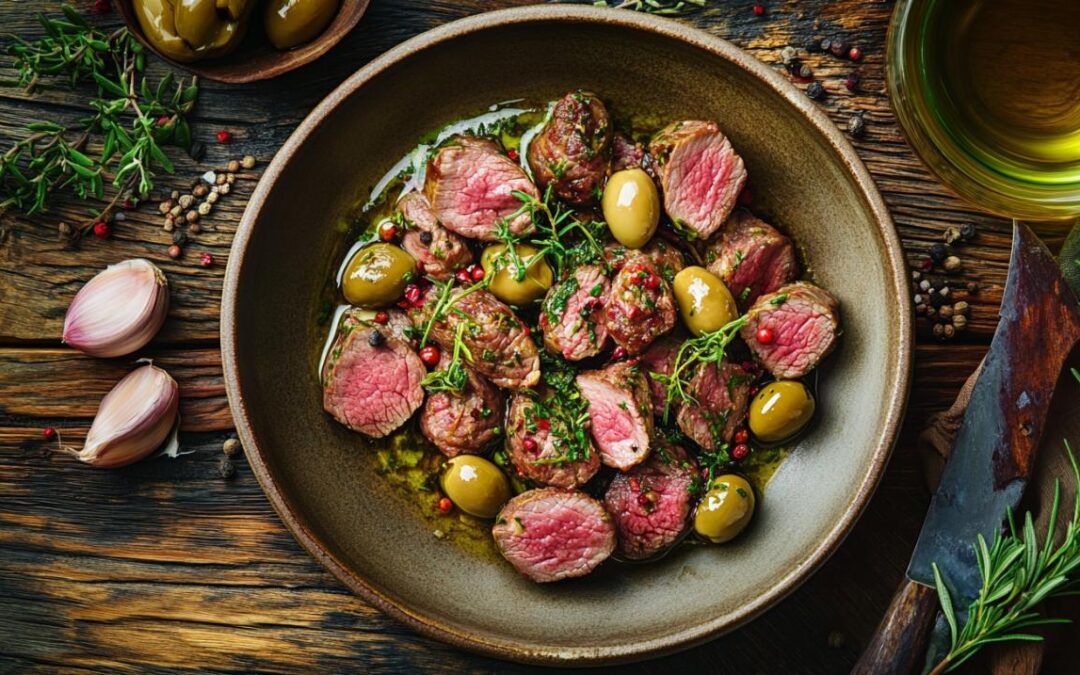
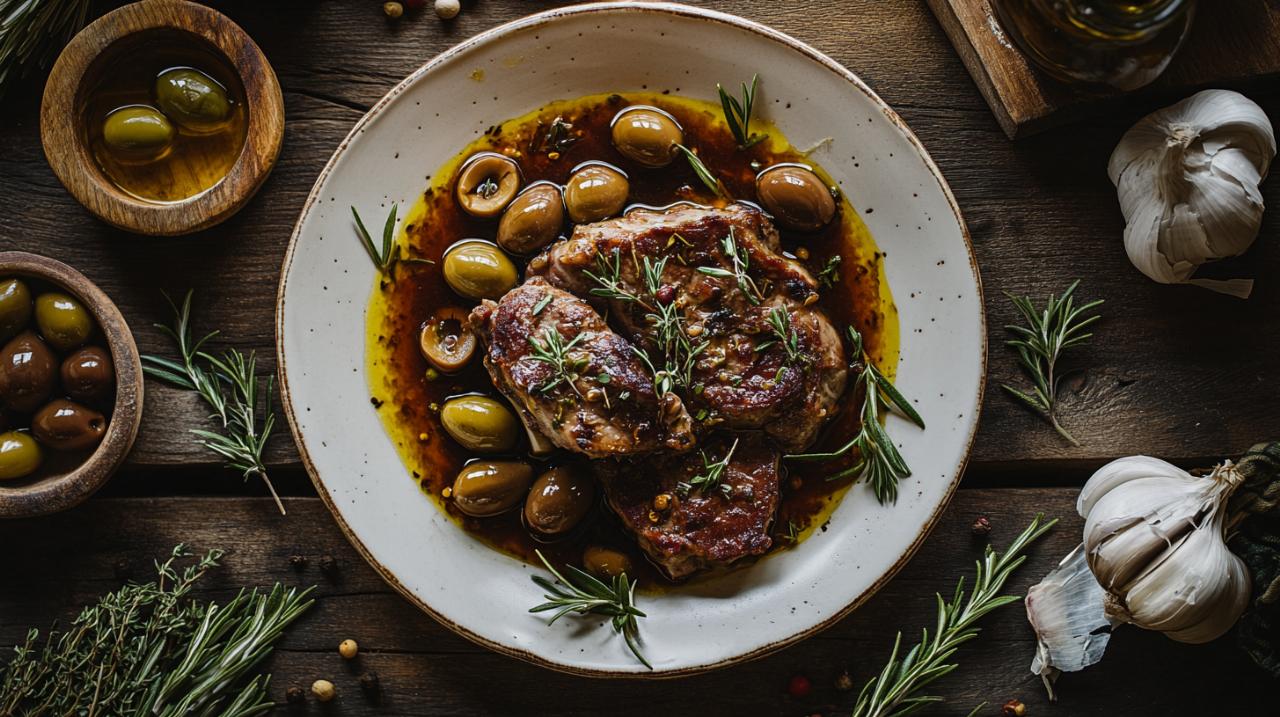
Serving veal with olives is an opportunity to showcase the rustic elegance of Corsican cuisine. The stew should be presented in shallow bowls or deep plates, allowing the rich sauce to pool around the tender pieces of meat. A final drizzle of high-quality olive oil over the top adds a glossy finish and a burst of fresh, peppery flavour. Garnishing with a few whole olives and a sprig of fresh thyme not only enhances the visual appeal but also signals to diners the key ingredients they are about to enjoy.
Traditional accompaniments include polenta, known locally as pulenda, which is made from chestnut flour and has a slightly sweet, nutty flavour that complements the savoury stew. Alternatively, crusty bread is ideal for soaking up the sauce, ensuring that not a drop of the precious liquid goes to waste. A simple green salad dressed with olive oil and lemon juice can provide a refreshing contrast to the richness of the veal. When it comes to wine, a glass of Patrimonio or Ajaccio red, made from Nielluccio or Sciacarello grapes, is the perfect pairing, echoing the flavours used in the cooking and tying the meal together with a sense of place.
Corsican veal with olives is more than just a recipe; it is a window into the island's soul. It speaks of a people who have learned to make the most of their land, who honour their history while adapting to the present, and who understand that the best meals are those shared with family and friends around a table laden with simple, honest food. Whether enjoyed in a small village on the island or recreated in a kitchen far from the Mediterranean, this dish carries with it the flavours and stories of Corsica, inviting all who taste it to pause, savour, and remember.